
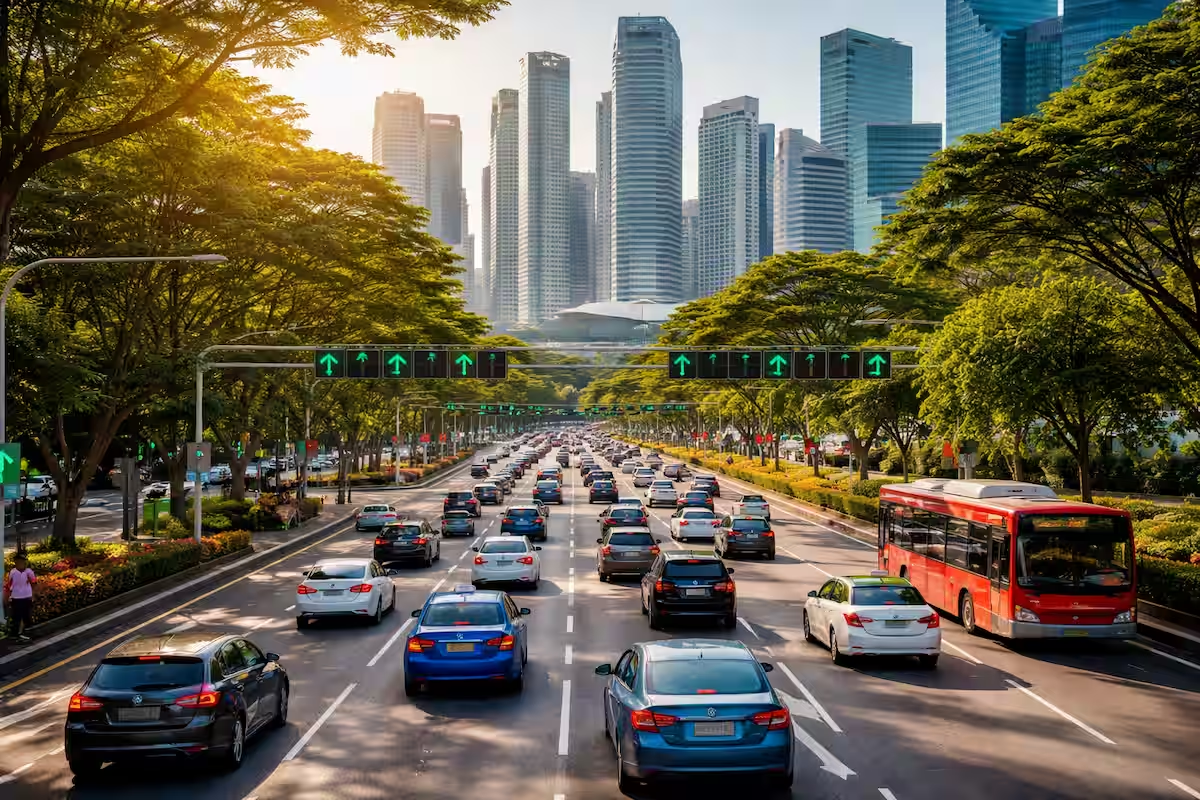
AI-Driven Traffic Optimization and Sustainability: Singapore in Practice
TechnoVita.net
Singapore has positioned itself as a global leader in technology-driven sustainable mobility, using advanced artificial intelligence to address congestion, emissions, and limited urban space. Rather than expanding road infrastructure, the city-state focuses on optimizing existing networks through data and AI.
Core Technologies Behind the System
Singapore’s traffic optimization relies on a layered AI architecture that integrates multiple technologies:
- Computer vision from roadside cameras to detect vehicle density, queue length, and incidents
- IoT sensors embedded in roads and intersections to measure traffic speed and volume
- Machine learning models trained on historical and real-time data to predict congestion patterns
- Reinforcement learning algorithms that continuously adjust traffic-light phases based on outcomes
These AI models operate in near real time, enabling traffic signals to adapt dynamically instead of following static, preprogrammed schedules. The system learns from daily traffic behavior, improving its predictions and responses over time.
Predictive Traffic Management
A key innovation lies in predictive rather than reactive control. By analyzing trends such as time of day, weather conditions, public events, and past incidents, AI systems can anticipate congestion before it occurs.
For example, if a model predicts increased traffic near a business district during peak hours, signal timings are adjusted proactively to balance traffic loads across alternative routes. This reduces bottlenecks and prevents congestion from spreading throughout the network.
Sustainability and Emissions Reduction
From a sustainability perspective, AI-based traffic optimization delivers measurable environmental benefits. Smooth traffic flow minimizes stop-and-go driving, which significantly lowers fuel consumption and tailpipe emissions. Studies consistently show that optimized signal timing can reduce CO₂ emissions by 10–20% in dense urban environments.
Singapore also prioritizes public transport and low-emission mobility within its AI systems. Buses receive signal priority at intersections, improving reliability and making public transport more attractive compared to private car use. This contributes to long-term modal shift, a critical factor in reducing urban carbon footprints.
Energy-Efficient Urban Mobility
Beyond emissions, AI helps improve overall energy efficiency. Predictive demand modeling allows transport operators to deploy buses only where and when they are needed, avoiding unnecessary empty runs. Combined with electrified public transport, this data-driven approach supports Singapore’s broader climate and energy goals.
Additionally, AI analytics help city planners identify structural inefficiencies — such as consistently congested intersections — enabling targeted infrastructure upgrades rather than costly large-scale expansions.
A Scalable Model for Sustainable Cities
Singapore’s AI-powered traffic management system demonstrates that sustainable mobility does not depend solely on autonomous vehicles. Significant environmental and efficiency gains can already be achieved through intelligent infrastructure, advanced analytics, and continuous learning systems.
For cities worldwide facing congestion, air pollution, and climate targets, Singapore offers a proven blueprint: use AI not only to move traffic faster, but to move cities toward a more sustainable future.
You can read all comments, but you must log in to post or reply.
No comments yet. Be the first to react!