
AI-Enhanced Stem Cell Therapy for Stargardt Disease
TechnoVita.net
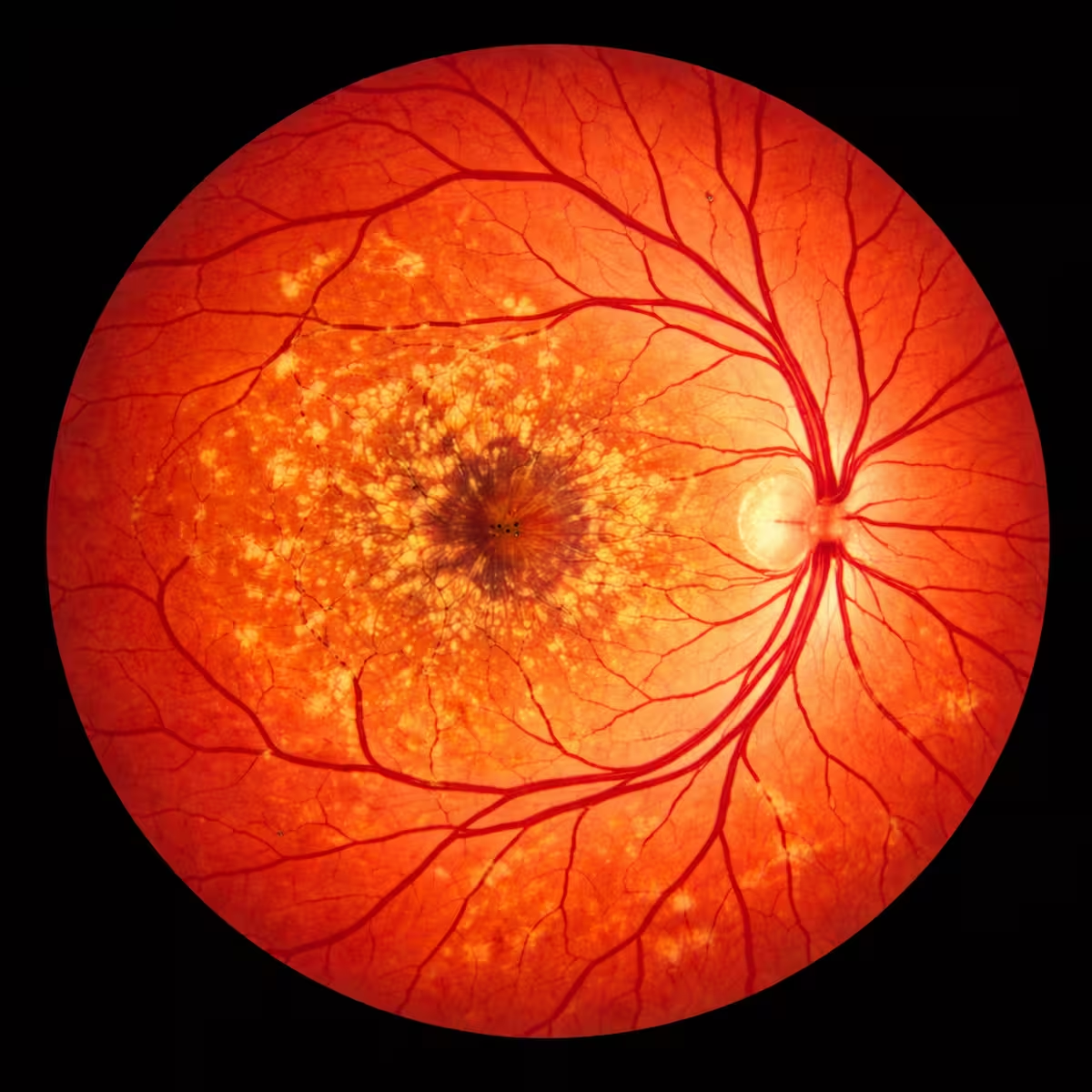
Stargardt disease is the most common inherited form of juvenile macular degeneration and remains a major cause of progressive central vision loss. Caused primarily by mutations in the ABCA4 gene, the disease leads to dysfunction and degeneration of retinal pigment epithelium (RPE) cells and secondary photoreceptor loss. Traditional therapeutic approaches have been largely supportive, offering no curative solution.
Recent advances in stem cell–based retinal regeneration, combined with artificial intelligence (AI), are transforming this landscape. AI now plays a critical role in optimizing cell differentiation, patient stratification, and post-transplantation monitoring, significantly accelerating translational progress from laboratory to clinic.
Stem Cell–Derived RPE Therapy for Stargardt Disease
The most clinically advanced stem cell approach for Stargardt disease involves the transplantation of human embryonic stem cell (hESC)–derived retinal pigment epithelium cells. RPE cells are essential for photoreceptor survival, visual cycle regulation, and retinal homeostasis. In Stargardt disease, toxic lipofuscin accumulation leads to progressive RPE cell death, making cell replacement a rational therapeutic strategy.
In recent clinical studies, laboratory-generated RPE cells were implanted into the subretinal space as either cell suspensions or structured monolayer patches. These transplanted cells demonstrated long-term survival, structural integration, and functional support of remaining photoreceptors, resulting in stabilization of visual decline in treated patients.
AI in Stem Cell Differentiation and Manufacturing
Artificial intelligence has become a powerful tool in optimizing stem cell differentiation protocols. Differentiating pluripotent stem cells into mature, functional RPE cells requires precise control of biochemical signals, timing, and environmental conditions.
Machine learning models are now used to:
- Analyze large datasets of differentiation experiments
- Predict optimal growth factor combinations and timing
- Detect subtle morphological markers of successful RPE maturation
Computer vision systems trained on high-resolution microscopy images can automatically classify cell populations, identify abnormal differentiation patterns, and flag potentially unsafe cell batches before transplantation. This AI-driven quality control significantly reduces variability and improves reproducibility in clinical-grade cell production.
AI-Enhanced Patient Selection and Disease Stratification
Stargardt disease exhibits significant phenotypic heterogeneity, even among patients with similar genetic mutations. Selecting patients who are most likely to benefit from RPE transplantation is therefore critical.
AI algorithms trained on multimodal retinal imaging data — including optical coherence tomography (OCT), fundus autofluorescence (FAF), and adaptive optics imaging — can:
- Quantify RPE degeneration with high precision
- Predict disease progression trajectories
- Identify retinal regions most suitable for cell implantation
By integrating imaging data with genetic and clinical variables, AI supports precision patient stratification, improving both safety and therapeutic efficacy.
Post-Transplantation Monitoring and Outcome Prediction
After stem cell transplantation, long-term monitoring is essential to assess graft survival, immune response, and functional benefit. AI-based image analysis enables automated detection of subtle structural changes in the retina that may be missed by human observers.
Deep learning models can track:
- Graft stability and migration
- Changes in photoreceptor layer thickness
- Early signs of inflammation or fibrosis
Furthermore, predictive models can correlate early post-operative imaging patterns with long-term visual outcomes, supporting adaptive treatment strategies and personalized follow-up protocols.
Toward Digital Retinal Twins
An emerging research direction is the development of digital retinal twins — computational models that simulate individual patient retinal structure and disease progression. These AI-driven simulations can be used to virtually test stem cell implantation strategies, optimize injection sites, and minimize surgical risk before actual intervention.
Although still experimental, digital twins represent a convergence of stem cell biology, imaging science, and AI, potentially redefining how regenerative therapies are designed and validated.
Challenges and Regulatory Considerations
Despite rapid progress, challenges remain. AI models must be transparent, validated across diverse patient populations, and compliant with medical device regulations. Likewise, stem cell therapies require stringent long-term safety monitoring to mitigate risks such as immune rejection or unintended cell proliferation.
Regulatory frameworks are evolving to address combined AI-biological therapies, emphasizing explainability, data integrity, and post-market surveillance.
Conclusion
Stem cell therapy for Stargardt disease is transitioning from experimental promise to clinical reality, with artificial intelligence playing an increasingly central role. From optimizing RPE cell differentiation to guiding patient selection and monitoring outcomes, AI enhances every stage of the therapeutic pipeline. Together, these technologies offer a highly targeted, data-driven approach to preserving vision in a disease once considered untreatable.
As AI models and stem cell platforms continue to mature, their integration may ultimately enable personalized, regenerative solutions for Stargardt disease and beyond.
You can read all comments, but you must log in to post or reply.
No comments yet. Be the first to react!