
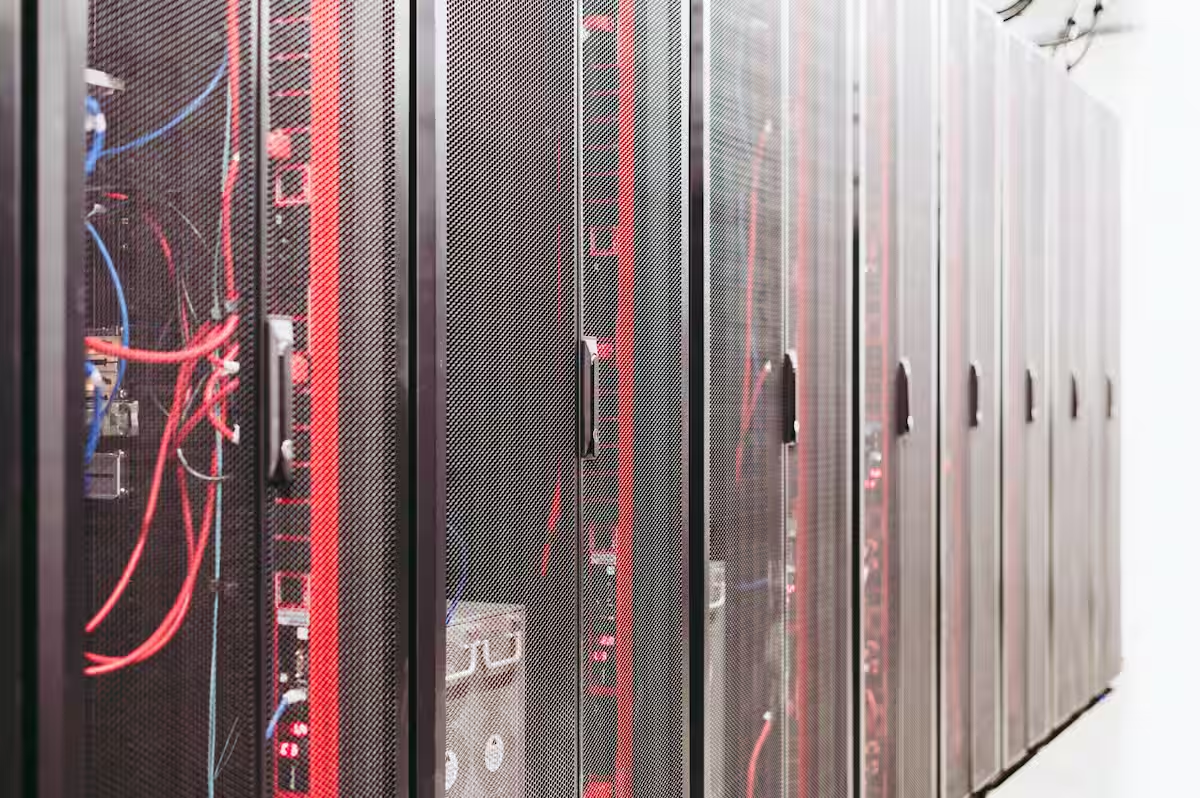
Energy‑Efficient AI Cooling in Modern Data Centers
TechnoVita.net
Introduction: The Heat Behind AI Growth
The rapid expansion of artificial intelligence (AI) has driven unprecedented demand for high‑performance computing infrastructure. This surge places enormous pressure on data centers, the backbone of cloud services and AI training. While this growth fuels innovation across industries, it also brings a critical sustainability challenge: managing the intense heat generated by AI workloads. Modern AI servers and GPU clusters produce massive thermal loads that traditional cooling systems struggle to handle efficiently. As a result, data centers are adopting AI‑enhanced cooling systems to maintain performance, reduce energy consumption, and lower environmental impact.
Why Cooling Matters for AI Data Centers
AI hardware — especially GPUs and custom accelerators — operates at high power densities, pushing traditional air cooling systems to their limits. Inefficient cooling not only increases energy consumption but also raises operational costs and shortens equipment lifespan due to overheating. With AI workloads projected to increase global electricity demand for data centers significantly, cooling systems have become central to both performance and sustainability strategies.
One metric commonly used to evaluate data center efficiency is Power Usage Effectiveness (PUE). A lower PUE indicates more efficient use of energy, with less wasted on non‑IT infrastructure like cooling. Modern cooling innovations aim to push PUE closer to the ideal value of 1.0, where almost all consumed energy directly supports computing operations.
AI‑Driven Cooling Technologies
Liquid and Immersion CoolingTraditional air cooling struggles with the dense heat produced by GPUs in AI workloads. Liquid cooling emerges as a more efficient alternative because liquids transfer heat more effectively than air. In liquid cooling systems, coolant circulates through cold plates attached to processors or even immerses entire servers in non‑conductive fluids to absorb and remove heat.
Across Europe, companies like Vertiv are introducing immersion cooling solutions designed specifically for high‑density AI and high‑performance computing environments. These systems can handle extreme thermal loads while enabling heat reuse within data center facilities — for example, to warm nearby offices or buildings.
AI‑Optimized Thermal Management
AI isn’t just the reason data centers need better cooling — it’s also part of the solution. Machine learning and advanced control algorithms analyze real‑time operations and adjust cooling parameters (like fan speeds, coolant flow, and valve positions) dynamically based on workload and temperature data. This intelligent control reduces unnecessary power use and ensures efficient heat removal.
Some academic research even demonstrates the use of reinforcement learning to continuously optimize liquid cooling systems, balancing thermal performance and energy use while adapting to changing workloads. These models improve overall efficiency and enable data centers to meet sustainability goals more effectively.
Leak Detection and Predictive Maintenance
Advanced AI can also help maintain cooling system reliability. Smart IoT sensors combined with machine learning can forecast and detect coolant leaks before they escalate into costly failures. Predictive maintenance strategies prevent energy waste from unplanned shutdowns and extend the life of critical cooling infrastructure.
Real‑World Innovations and Impact
Major tech companies and infrastructure firms are actively implementing cutting‑edge cooling systems:
- Schneider Electric & Nvidia Partnership: This collaboration produced reference architectures optimized for high‑density AI racks. Virtual tests suggest these designs can reduce cooling energy usage by roughly 20% while speeding up data center project delivery by approximately 30%, resulting in both cost and environmental benefits.
- Dell’s PowerCool System: Dell’s enclosed heat exchanger captures nearly all waste heat and recirculates it efficiently, enabling cooling with warmer water and reducing cooling energy consumption by up to 60% compared to conventional liquid cooling racks.
These examples show how combining improved hardware designs with intelligent control strategies leads to substantial gains in sustainability and operational efficiency.
Benefits Beyond Energy Savings
AI‑driven cooling systems offer more than reduced electricity bills. They also:
- Extend hardware lifespan by preventing thermal stress and overheating.
- Enhance reliability, decreasing downtime through predictive maintenance.
- Enable higher server density, providing more computing power per square meter without proportional increases in cooling demand.
- Support heat reuse, which contributes to circular energy flows within building complexes.
Challenges and Future Directions
Despite clear benefits, challenges remain. High upfront investment costs and complexity can slow adoption for smaller data centers. Additionally, cooling systems must integrate with broader sustainability strategies, including renewable energy sourcing and heat recovery. Ongoing research into novel cooling materials and microfluidic techniques shows promise for even more efficient future designs.
Going forward, data centers are likely to adopt hybrid cooling solutions that combine AI optimization with multiple thermal management technologies. As AI workloads grow, these systems will be crucial for balancing performance demands with environmental responsibility.
Conclusion: Cooling as a Cornerstone of Sustainable AI Infrastructure
AI cooling systems represent a vital innovation at the intersection of performance and sustainability. By leveraging intelligent control algorithms, efficient liquid cooling architectures, and predictive maintenance, modern data centers can significantly reduce energy consumption and environmental impact. As AI continues to drive digital transformation across industries, sustainable cooling solutions will play a key role in enabling that growth responsibly — ensuring that the digital future is both powerful and sustainable.
You can read all comments, but you must log in to post or reply.
No comments yet. Be the first to react!